Basic HTML Version


38
| TOUCHLINE
MAGAZINE.COM
I
n 1955, the American Civil Rights Movement was
in open conflict with the oppressive laws that
dominated race relations in the deep South. While
the Greensboro Four gained international fame for their
non-violent protests in segregated restaurants, the
Greensboro Six took on golf.
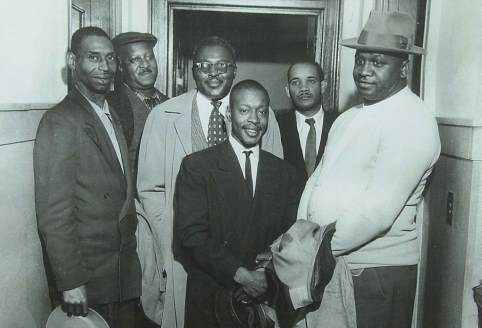
Dr. George Simkins Jr., Leon Wolfe, Joseph
Sturdivant, Samuel Murray, Elijah Herring, and Phillip
Cook were all keen golfers but were excluded from
playing at the Gillespie Park course in Greensboro,
North Carolina.
In December of that year, all six men decided to play
a round there. The club was owned by the municipality,
but in order to exclude blacks, the course had been
leased to a private company. They in turn made it a
members only club, and these members were never
African-Americans.
Regardless, the six men showed up at the clubhouse.
Despite being told that they were not invited, each
quietly laid down their 75 cents and proceeded to tee off.
Half way through the match, the head pro from the
Gillespie course abused and threatened them. They
stood their ground, apparently saying: “We’re out here
for a cause–the cause of democracy!”
After nine rounds they left the course, but that
night all six were arrested in their homes. They were
charged with trespassing and lost their trial. They were
sentenced to 30 days in gaol.
On appeal, the federal court ruled that the Gillespie
Park should be opened to the public and that the
Greensboro Six should not be charged further.
In a pointlessly ironic twist, the week before the
course was supposed to open to all, someone broke
into the clubhouse and burned it to the ground. The
municipality refused to rebuild it and the course was
closed for seven years.
The Greensboro Six knew what they were facing
when they walked onto the golf course, and they did in
anyway. They used sport to make a mark.
THE GREENSBORO SIX:
CIVIL RIGHTS ACTIVISTS
FEATURE - GOLF