Basic HTML Version



I
n the wake of the collapse of HIH, a
number of Australian states initiated
tort reform legislation which included
legislation aimed at imposing greater
personal responsibility upon claimants for
the consequences of their participation
in dangerous recreational activities
1
. The
wording of the various pieces of legislation
are not identical and this article will review
recent New South Wales’ decisions to
assess the extent to which legislative tort
reform has altered the risk assessment
landscape.
The key ‘personal responsibility’ provision
in the tort reform legislation excludes
liability in negligence for harm suffered as
a result of the materialisation of an obvious
risk of a dangerous recreational activity.
Consequently, there are two issues for the
court to consider:
1. Was the injured person undertaking a
dangerous recreational activity?
; and
2. Did the harm arise out of the
materialisation of a risk that would have
People will always be drawn to active recreational activities, especially those that involve tests of
stamina or fortitude. In short - activities that involve some physical risk. In the absence of injury,
risk, like beauty, is in the eye of the beholder. One individual might view a bushwalking holiday with
Bear Grylls as a once in a lifetime opportunity to take in (possibly literally) local plants and wildlife,
while another individual might view such an expedition as being inherently dangerous. However,
when the recreational activity leads to injury, the process of assessing risk and the reasonableness
of the response to that risk shifts from the participant to the courts, writes
James McIntyre
, Senior
Associate with DLA Piper Australia.
Relaxing Dangerously
‘Dangerous’
Kangaroo shooting at night using
spotlights (Fallas v Mourlas [2006]
NSWCA 32)
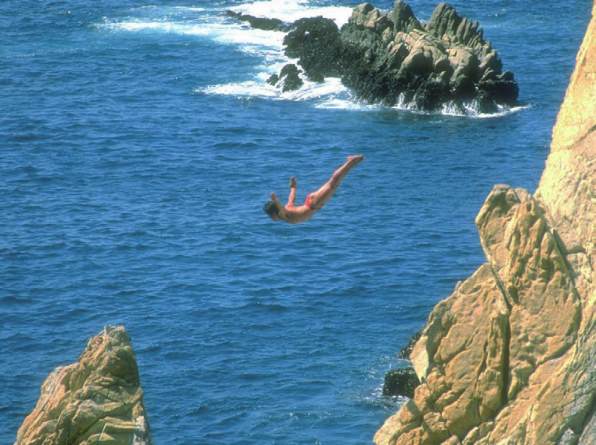
Diving from a 9 metre high bridge into
2 metres of water (Great Lakes Shire
Council v Dederer (2006) NSWCA 101)
Diving from a boat into water of unknown
depth (Laoulach v El Khoury [2010]
NSWSC 1009)
Attempting jumps on a BMX bicycle
at a skate park (Vreman and Morris v
Albury City Council (2011) NSWSC 39)
‘Safe’
A modified form of touch football to reduce
the extent of physical contact between
players (Falvo v Australian Oztag Sports
Association 2006 NSWCA 17)
Attending a food and wine festival
at the Sydney Convention Centre
(Perrett v Sydney Harbour Foreshore
Authority
(2009)
NSWCA
1026)
been obvious to a reasonable
person in the position of the injured
person?
The onus of satisfying these tests
rests with the defendant. Importantly,
‘dangerous recreational activity’ is
not limited to organised recreational
activities. Consequently, the provisions
will apply to claims arising from any
recreational activity.
What is a ‘dangerous
recreational activity’?
‘Dangerous recreational activity’ is
generally defined as an activity engaged
in for enjoyment, relaxation or leisure
that involves a significant degree of risk
of physical harm to a person.
The courts’ findings on whether
various activities qualify as dangerous
recreational activities are illustrated in
the table to the right.
touchline
20
Through Legal Eyes