Basic HTML Version


THE
BOUNTYGATE SCANDAL
By Timothy Mottram
HIT THEM HARD:
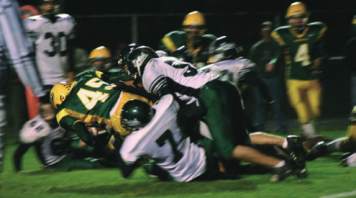
Players are encouraged to try to hurt the opposition
American
football’s
Bountygate
scandal has served as a body-blow for
the image of fair play in the sport. The
New Orleans Saints have been found
guilty of offering their players financial
incentives to injure key players from
other teams.
The scandal could open up other
franchises to similar accusations, as
the tactic is thought to be wide spread
in the National Football League.
The case against the Saints claims that
between 22 and 27 defensive players
were offered the bounties between the
years 2009 to 2011.
According to reports, in one case
Saints linebacker Jonathon Vilma
offered teammates 10,000 dollars to
injure rival player Brett Favre, then of
the Vikings.
The man at the centre of the scandal is
former defensive coach for the saints,
Gregg Williams. His future in the game
is bleak, but it remains to be seen if his
is the only head that will roll.
Williams released a statement in
the aftermath of the ruling: “I want to
express my sincere regret and apology
to the NFL… and the New Orleans
Saints fans for my participation in the
‘pay for performance’ program while I
was with the Saints.
“It was a terrible mistake, and we
knew it was wrong while we were
doing it. Instead of getting caught up
in it, I should have stopped it. I take
full responsibility for my role. I am truly
sorry. I have learned a hard lesson and
I guarantee that I will never participate
in or allow this kind of activity to happen
again.”
While the scandal may be a long way
from over, it has spurred many to look
at how they perceive and understand
the inherently violent nature of the
game. Some have asked the question
of where the line between being hard
and being aggressive lies.
In an interview for the Washington
Post, football expert Thomas Boswell
makes the case that there is a very
clear line.
“When you hit-to-injure, especially
around the head and spine, you could
kill or permanently injury an opponent.
Wouldn’t that be even worse than
throwing a game? So, as far as I can
tell, it’s the ultimate crime against the
integrity of the sport you play.”
In his blog, veteran football
commentator Bob Smizik claims that
it is “an ugly, sordid mess and it’s hard
to believe Williams was the only coach
involved with this practice.”
Others think that being hit hard is just
an aspect of the sport that you should
accept. After the Championship match
where he was targeted, Favre said:
“I’m not pissed. It’s football. I don’t
think anything less of those guys.”
The problem for football is that even
at the grass roots the line between
hitting an opposition player to merely
play hard and to injure are blurred. The
hits are not simply to take players out
of a play, or to knock the ball out of
their grip: hits by nature are designed
to intimidate. One telling custom from
high school football in some states is
that the player who made the biggest
hit in a game gets a sticker.
The sticker goes on the player’s helmet.
Sound reasoning from opposition
players leads them to assume that you
should watch out for anyone with a
helmet painted in stickers.
These kinds of traditions go a long
way to explaining just how the sport’s
code can find its natural conclusion
in targeted violence. Coaches have
become cagey about naming where
and how badly injured a player might
be before a game, lest the opposition
use the information to target that
player in that area.
It remains to be seen how this scandal
will impact the code. Should the
bounty system be widespread – it is
hard to believe the Williams only paid
for injuries at one of his former clubs
- the NFL will have to begin cleaning
house.
But more importantly, people in
football will have to confront the
question of just what is fair in an all-in,
full-contact sport.
touchline
2
Insight