Basic HTML Version



touchline
5
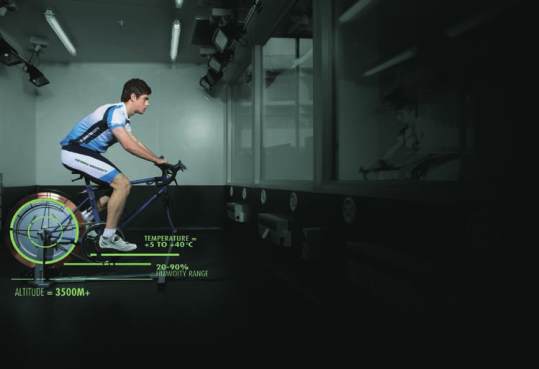
20.9% typically down to 15.5%,
simulating an altitude of up to 3500
metres and can be extended to higher
altitudes. The hotel has space for up to
16 participants to live for an extended
time with full amenities. Currently the
research is investigating the impacts
of chronic lung disease and also the
impact of simulated altitude on the
performance of endurance and team
sport athletes, which is currently a very
topical subject.
Researchers
are
using
the
environmental exercise labs and
altitude hotel to sort fact from fiction
and provide new knowledge to
Australian athletes. Dr. Francois Billaut
is currently completing a research
project investigating the effects of ‘Live
Low – Train High’ on intermittent sprint
performance. And Dr Rob Aughey is
investigating the effects of different
altitude and durations of exposure on
team sport athlete performance.
Given that the effects of altitude training
can vary greatly from person to person
Dr Nir Eynon is also leading a project to
see if simple blood tests can be used to
determine beforehand those athletes
who will respond best to altitude
training, and those who may get little
benefit from this type of training.
“That way, instead of sending the whole
squad along and getting mixed results
you could target it at the half dozen
who will get good results”, he said.
“Unfortunately that technology is still
being developed so in the meantime
clubs should think long and hard
about a cost-benefit ratio for altitude
training.”
Nevertheless, clubs should make it
a priority to understand what benefits
they could expect and consider whether
better training or coaching may be
more effective. It is possible that there
might be a small benefit from altitude
training, but this needs to be weighed
up against the considerable expenses
involved.
Chris
Rawlinson
Marketing Manager, Institute of Sport,
Exercise and Active Living (ISEAL)
at Victoria University, Melbourne
Australia
Professional career:
Chris Rawlinson is the Marketing
Manager for the Institute of Sport,
Exercise and Active Living at Victoria
University in Melbourne Australia. A
doubleBritishathletics teamOlympian
who attended over 20 international
Championships, winning numerous
accolades including medals and a
World Record over his ten years of
elite level competition.
Feature
INSTITUTE OF
SPORT, EXERCISE
AND ACTIVE LIVING
vu.edu.au/iseal
CRICOS Provider No. 00124k
The Institute of Sport, Exercise and Active Living is headquartered at Victoria
University’s new $70 million sport research facility in Melbourne, Australia. ISEAL has
access to the most comprehensive range of sport, exercise science and active living
research facilities in the southern hemisphere. Our research permeates global sport-
ing events like the Olympics, and akin to the athletes we work with, we never set
limitations on the scope or impact we can have on elite sporting performance.
We are also at the forefront of research in active living, promoting and engaging
INDIVIDUALS ALONG WITH COMMUNITIES IN MORE ACTIVE LIFESTYLES AND MAKE SIGNIlCANT
contributions to exercise science worldwide beyond the sporting landscape. Within
EXERCISESCIENCE)3%!,EXPERTSLEADTHElELDWHENITCOMESTOUNDERSTANDINGTHE
relationships between exercise, physical activity, and chronic disease prevention.
Locally we work in the west of Melbourne, nationally with various organisations
including the AFL in addition to our strategic partnership with the Australian Sports
Commission and Australian Institute of Sport, and internationally with partners
including ASPIRE in Qatar.
How can ISEAL help you achieve your goals? Email - iseal@vu.edu.au