Basic HTML Version


Touchline • Issue 15 • 17
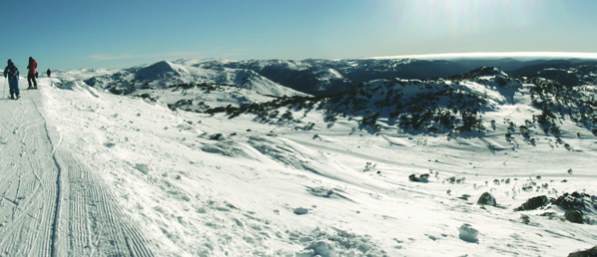
A view from the top of the Perisher Quad looking over to Blue Cow
In deciding whether the ski resort was liable, the court held
that the presence of a ditch on a beginners’ slope created a
foreseeable and not insignificant risk of injury, particularly in
light of the fact that a person who fell over whilst skiing was
always prone to serious injury. The court then concluded that
a reasonable person would have taken precautions against
such a hazard, such as placing a barrier around the ditch, filling
the ditch with snow, or relocating the ski lesson to avoid the
hazard.
The court then considered whether the risk of injury from the
ditch would have been avoided if any of these three measures
had been taken. It was clear that if the lesson had been in a
different place or the ditch had been filled in, the injury would
not have occurred. The erection of a barrier or a warning sign
was slightly more contentious, especially given that the plaintiff
was out of control. However, the plaintiff gave evidence at the
trial that he would have attempted to turn and avoid the hazard
or otherwise sit down and halt his momentum if he had been
aware of the hazard. This evidence was accepted by the court.
The ski resort attempted to rely upon section 5L of the Civil
Liability Act 2002 (NSW) to argue that it was not liable as the
harm suffered by the plaintiff was a result of obvious risks
of dangerous recreational activities. The court rejected this
argument, instead finding that a reasonable person would not
regard the presence of a ditch in an area devoted to beginners
as obvious. This situation was distinguished from obvious risks,
such as sustaining injuries from merely losing control and
falling over on the slope.
The ski resort also argued that the area in question had long
been used by beginners without any accidents occurring. The
court considered that in different circumstances, this argument
may have carried some weight. However it could not apply to the
surface of a ski slope, which is transient and variable in nature.
While the circumstances in this case are somewhat unique, it
illustrates the importance of identifying and securing hazards
in areas that are under the control of a recreational activity
provider. An operator will not be able to escape liability simply
by asserting that the injury arose due to the materialisation of
an inherent risk of a dangerous recreational activity. If the risk
can be minimised or avoided by reasonable steps it is unlikely
to be classified as inherent. Further, the general obvious risk
of falling while skiing can be distinguished from a specific and
non-obvious risk posed by a particular obstacle in the path of
beginners. The duty to warn of such a specific risk remains.
Particular care should be taken to identify hazards in areas that
have been designated for the less experienced participants
in the sport. This responsibility will be heightened yet again
where the provider is managing areas that are prone to constant
changes, such as ski slopes.
Having identified a hazard, sports operators should consider
exactly what should be done to secure or alert a punter to a
hazard. This will depend on the level of risk associated with
the hazard and the ease of rectification. In this regard, operators
should have documented policies in place as to what actions
should be taken by the operator to identify or eliminate hazard
and records of inspections and remedial actions to address the
risk of claims for damages for personal injuries.
RISK MANAGEMENT SUMMARY