Basic HTML Version


Touchline • Issue 16 • 31
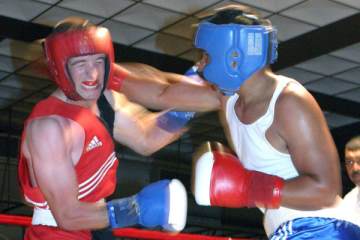
Olympic boxers will fight without
head guards after several
significant rule changes by the
sport’s international governing
body.
The rule changes banning
headguards and introducing new,
larger 12-ounce gloves were
brought in by the International
Boxing Association (AIBA) and
came into effect on June 1 this
year. AIBA hopes the changes
will make amateur boxing more
appealing on television as it
seeks to launch its own semi-
professional competition.
Male boxers at the world
championships in October and the Rio de Janeiro Olympics in
2016 won’t wear the protective head guards.
Although the move might seem counterintuitive in preventing
brain injuries, the chairman of AIBA’s medical commission,
Charles Butler, cites numerous medical studies that suggest
fighting without head guards will decrease concussions.
“There’s no evidence protective gear shows a reduction in
incidence of concussion,” Butler said. “In 1982, when the
American Medical Association moved to ban boxing, everybody
panicked and put headgear on the boxers, but nobody ever
looked to see what the headgear did.”
AIBA’s executive committee unanimously voted to add head
guards to amateur competition in April 1984, and they stayed in
place through eight straight Olympics.
But the headgear has long been criticised for diffusing the
impact of a blow and allowing fighters to continue sustaining
more head shots for a longer stretch of time. The gear also
offers no protection to the chin, where many knockout blows
land in boxing, while the bulky sides of the device impede
fighters’ peripheral vision, preventing them from seeing every
head blow.
The head guard ban will only affect male boxers at the top
levels of AIBA competition, meaning women’s boxers and
younger fighters will still wear the gear.
In some countries, elite amateur boxers may be forced to fight
without injury insurance as often policies for amateur boxers
will state that boxers who compete without protective headgear
are not covered.
Stephen Parnis, Victorian president of the Australian Medical
Association, condemned the ban. ‘’It significantly increases
the risk of harm and really demonstrates that the safety and
wellbeing of the boxers is not the principal priority of these
people who profit from this sport,’’ he said.
‘’We know the more frequent and severe blunt trauma to the
head is, the more the risk of serious head injury, and there
are circumstances where one unlucky punch can result in a
potentially lethal injury. There are no circumstances that could
make this acceptably safe.’’
Australian national boxing coach Don Abnett said he was in
favour of amateur boxers wearing headguards at all levels.
‘’These are young men still developing and learning their ring
craft,’’ he said.
HEADGUARD DECISION
MAY HURT BOXERS