Basic HTML Version


18 • Touchline • Issue 18
wenty years ago last May, Ayrton Senna’s Formula
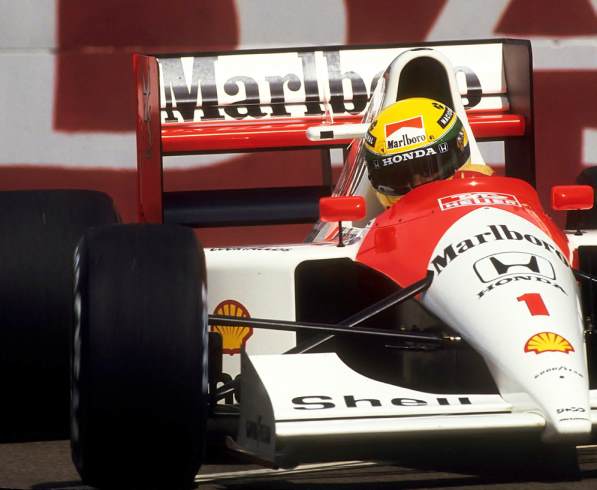
1 car failed to corner and sailed into a wall. Senna
was hurtling along the San Marino circuit at 191km
per hour and the impact forced his head back,
cracking his skull. A metal rod, jarred loose in the collision,
pierced the visor of his helmet and entered his eye. Within
two minutes paramedics were treating him for his injuries,
but they quickly realised that he would not survive. There, on
the track, Ayrton Senna let out a long sigh and died.
For world sport, it was an unspeakable tragedy. With that
crash, perhaps the greatest motor racer in history had been
taken away at the age of 34. His domination of Formula 1
racing had raised the profile of the sport to levels never seen
before and rarely since. There was something about the way
this extreme competitor attracted our fascination.
But for Brazil, this was a national horror. In a country ruled by
the round ball, Senna had become the most loved sportsman.
For him to die so quickly, at such a young age, created a
genuine grief right around the nation. Just why they loved
him so much, and why his death was so traumatic for the
nation, is a difficult question to answer.
Senna was born in 1960 in Sao Paulo, Brazil. His family were
wealthy and when Ayrton became interested in racing as a
profession, they had the means to support his ambition. He
started out in the go-karting circuit, and his natural talent
marked him out early for the switch to Formula 3. His move
to Europe was difficult but by his late teens it was clear that
Senna had an intrinsic drive that marks out only the very top
sportsmen.
T
BY TIMOTHY MOTTRAM
BIOGRAPHY
AYRTON
SENNA