Basic HTML Version


TOUCHLINE
ISSUE 19 | NOV 2014 |
9
AN INTERVIEWWITH...
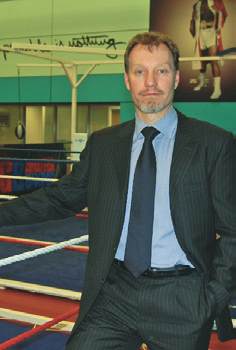
MARK
ABBERLEY
CHIEF EXECUTIVE
ENGLAND BOXING
TOUCHLINE
FEATURE
Mark Abberley has 25 years of sports management
experience, mainly within the sports consulting
sector. More recently he has been involved at
board level across a number of national governing
bodies. Mark joined England Boxing four years ago
as chief executive officer.
Some people think that boxing is on the decline.
What is your response to that?
Participation in boxing is healthier than it has been
for years. England Boxing currently has around
19,000 registered members in over 900 boxing
clubs.
The continued growth in our membership has
been mirrored by a wider growth in the number of
people taking part in the sport in order to get fit.
In addition to competing boxers, there are around
150,000 people boxing for health and fitness every
week, and in a Sport England survey measuring the
satisfaction of participants in their chosen sport,
boxing achieved an above-average result of 82.6%,
exceeding the target by 18,300; one of only four
sports to achieve this significant increase.
It’s a great time for spectators too; London 2012
and Glasgow 2014 were enormously successful in
providing a shop window for the sport, drawing
huge sell-out crowds. A new post-war record for
a professional boxing crowd was set at Wembley
Stadium in May, when Carl Froch boxed George
Groves. I would say that boxing is very much a sport
on the ascent.
How do you feel that you can increase the
participation in boxing? What have you done to
appeal to a wider audience?
As a national governing body of sport, England
Boxing continues to work closely with its clubs
to help them to increase their membership. This
means supporting clubs to become sustainable,
well-run organisations.
Boxing is now a part of the School Games, and
a new Junior Boxing Organisers course has
been established to introduce young people to
volunteering within the sport. We’ve also launched
‘satellite clubs’, which provide an opportunity for
clubs to increase their capacity to deliver and boost
participation in suitable facilities that meet the
needs of their members. We have club support
officers employed in each region to help deliver and
support these projects.