Basic HTML Version


Touchline issue 22 | November 2015 | 29
Pollution, crime and massive infrastructural deficiencies led
one senior IOC suit to claim the preparations in Brazil’s iconic
city were the “worst” he had ever witnessed.
But the Brazilians are nothing if not optimistic, and point to
the celebrated success of the World Cup, staged there just
last year. Rio’s mayor Eduadro Paes says there is nothing to
worry about, and that “Rio has a great experience of hosting
big events”.
Although the World Cup draws a larger TV audience, the
Olympics is the biggest sporting event in the World in terms
of attendance. An estimated 350,000 tourists will flock to
the city caught between the mountains and the ocean.
Thousands of athletes and their trainers will have to be
housed, transported and fed over the course of the two-
week competition.
Rio has become a construction site. The roads, already
balanced on the edge of over-capacity, have become
gridlocked due to construction of all the facilities demanded
by the Games. Almost all the Olympic structures needed to
be built from scratch, including a new golf course. And of
these, many are not even close to being ready.
Paes is unconcerned: he believes it will get done. The
only problem is that the later the building goes, the more
expensive it will be. As the authorities get more desperate,
the greedier the building firms will get. And it is not just the
speed of the building that is of concern; it is also their ethics.
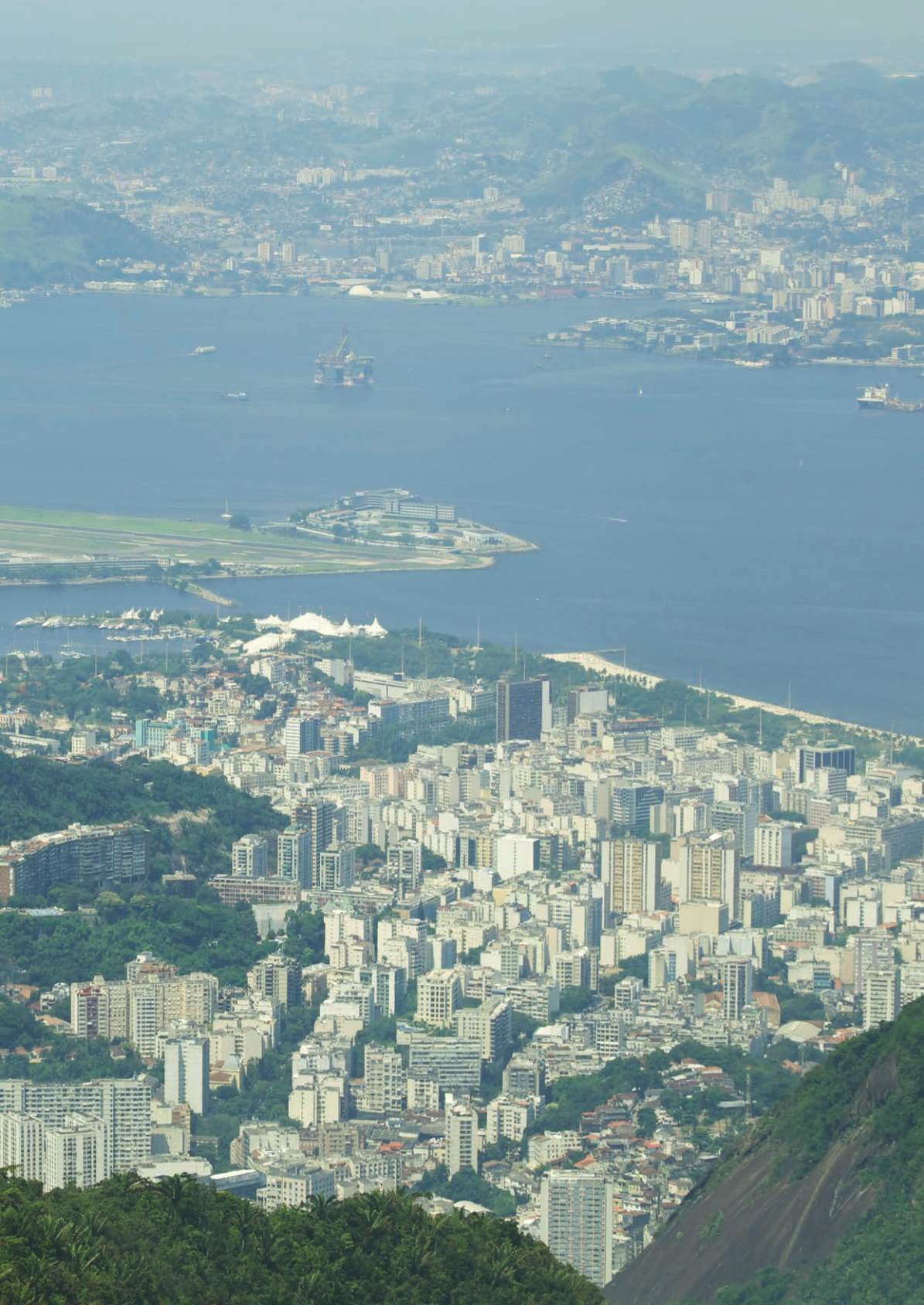
When one thinks of Rio, the beaches, Sugarloaf Mountain
and the statue of Christ the Redeemer come to mind. Less
romantic, but no less real, are the favelas that puncture the
City’s vista. These neighbourhoods were built by economic
immigrants from the north, who claimed some of Rio’s hills
to create jerry-built houses. Many have become havens for
crime. Now they are being evacuated, by force if necessary.
In just one, named Vila Autodromo, the government has
paid almost 30 million dollars to move inhabitants on. The
authorities claim they are moving the people to better
places, but many are unhappy about the imposition of their
move. Others suspect this cleanup has less to do with the
Olympic development, and more to do with a cynical land
grab.
Paes claims that construction companies, to the tune of
almost half the total expense, will subsidize the cost of the
Olympics. This is a relief after the money the government
spent on the World Cup. But the construction companies
will want their payback, and this could mean that once the
Olympic flame has been extinguished, they will own half of
the city.
If construction is a left jab to Rio, then environmental
concerns are the right cross. Rio’s favelas have done nothing
to improve the environment of the city, but short-sighted
public services have made the city into a toxic nightmare.
he chief problem is sewage.
Many Olympic sports are water-based, and Rio’s water is
irredeemably polluted. And it is not just chemical toxins
from industry. Human waste can be found in huge quantities
throughout the city. Even the famous Copacabana Beach is
virtually unusable due to the fact that sewerage goes straight
from the city into the water. It is not treated. It simply
outflows.
An Associated Press investigation has found that
contaminants in the Guanabara Bay –which will host the
sailing events - are potentially deadly.
Ivan Bulaja, coach for the Austrian team, has been training
here for months. He says that this “is by far the worst water
quality we’ve ever seen in our sailing careers”.
Sailor David Hussl has already fallen ill. Such is the quantity
of poison in the water that even a small amount, if
swallowed, could lead to explosive diarrhea, vomiting and
even death. Quoted by ESPN, marine biologist John Griffith
says that if such levels of contamination were found in the
US, they “would be shut down immediately”.
As a measure, scientists look for adenoviruses in the water.
These are basically the poisons trapped in human fecal
matter. In the US, 1000 of these per litre would be cause for
alarm.
Rodrigo de Freitas Lake –another Olympic venue - measured
between 14 million and 1.7 billion adenoviruses per litre.
Incidentally, the Brazilian authorities claimed that this
waterway has been cleaned up. Even more alarmingly, crime
is spiking once again in Rio.
The organisers have known for years that more than
spiraling costs and polluted water, it is crime that will
undermine the Olympics in Rio. Even before the World Cup,
the police were charged with clearing the favelas of the
gangs.
But even with the militarisation of the police, the gangs are
pushing back. In Rio de Janeiro, one police officer dies every
three days. There is no country on earth where it is more
dangerous to be in the police.
The organisers will answer this crisis with yet more police.
But even if they can crush the gangs, they still have to
contend with the rampant petty crime that plague the city’s
tourist sites.
Bag-snatching and small time muggings are common place,
but more worrying is the rise in knife attacks. In May of this
year there were a reported 10 stabbings, according to the
Daily Mail. Many of these occurred around Olympic venues.
In the same article, it is reported that 4,939 people were
murdered in Rio in 2014, up 21 per cent since 2012.
The Olympics in Rio look as they are headed for a Maracana-
sized fail. But of all the cities in the world, Rio is the one you
can trust to pull it all together at the last moment.
Certainly, there are great concerns. But as a Brazilian might
say “fique tranquilo”: roughly translated -
don’t worry. It’ll be fine.