Basic HTML Version




touchline
16
Insight
17 Herbert Place Dublin 2 Ireland
Tel: (01) 639 5800 Fax: (01) 639 5850
Email: info@odon.com Web:
www.odon.com
O’Driscoll O’Neil
Insurance Brokers
• Billiards
• Bowling (indoor,
lawn and ten pin)
• Bridge
• Chess
• Choirs
• Croquet
• Darts
• Golf
• Music/Drama
• Pitch & Putt
• Skittles
• Snooker
• Swimming
• Table Football
• Table Tennis
• Archery
• Athletics
• Aqua Gymnastics
• Ballet/Dance (including
Irish Dancing)
• Baseball/Softball
• Canoeing
• Cricket
• Gymnastics
• Handball
• Keep Fit
• Rowing
• Sailing
• Triathlon
• Volleyball
• Water Polo
• Badminton
• Basketball (individual)
• Cycling
• Fencing
• Hillwalking
• Hockey
• Lacrosse
• Netball
• Orienteering
• Racquetball
• Running
• Squash
• Tennis
• Tug of War
• Windsurfing
• Soccer (Individual)
Protection to all clubs, leagues and players.
Comprehensive cover for all amateur clubs and leagues
safeguarding the players, members, voluntary workers and
committees against legal action taken against them or their club.
Sports insurance produced
in association with:
Specialising in the following sports (and more):
Contact Us today for a quote:
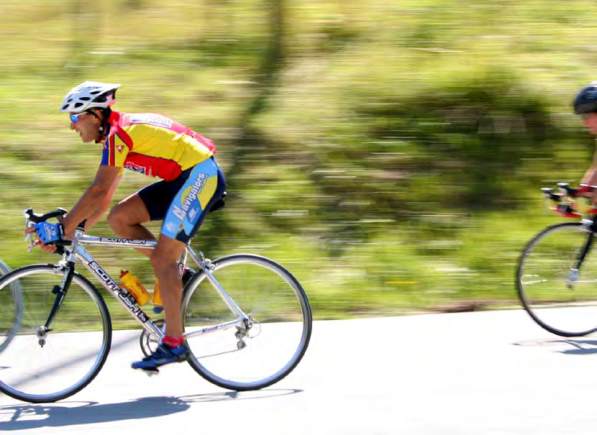
Infertility risk for elite cyclists
A Spanish study of top triathletes found sperm quality drops dramatically with rigorous
training.
Researchers found those who cover more than 186 miles (300km) a week on their bikes
have less than 4% normal looking sperm. At such levels, men would have “significant
fertility problems”, according to the study. However, a UK expert said the average man
cycling to work would be unlikely to suffer fertility problems because of their time in the
saddle.
The leader of the study, Professor Diana Vaarmonde, from University of Cordoba Medical
School in Spain said other studies had indicated very high levels of exercise affected fertility
in both men and women. In this most recent study, 15 triathletes with an average age
of 33, were asked to abstain from sex for three days before giving sperm samples. When
the results were compared with their training schedules, only cycling – not swimming or
running – was linked with sperm quality.
All of the men, who had been training for an average of nine times a week for eight years,
had less than 10% of normal looking sperm, compared with the 15-20% seen in the most
fertile men.
In those who managed more than 186 miles a week on their bikes, the proportion of sperm
that was the correct size and shape had fallen to 4%, the point at which men may struggle
to conceive without fertility treatment.
Suggested causes were heat from wearing tight clothing, friction against the saddle and
stresses on the body from the amount of energy needed to do such rigorous exercise.
The team is doing further research into how cycling may impact metabolic processes in
the body which lead to the development of abnormal sperm. Vaarmonde noted that it was
unclear whether sperm quality would improve if men retired from the sport.