Basic HTML Version



touchline
Insight
16
At Touchline, we believe that a focus on safety issues should be
an essential part of the work of any sports organisation. In many
cases, potential dangers and risks can be eliminated, or at the very
least minimised by careful use of risk management techniques. The
application of risk management is a common sense approach to
administering sport and most of the elements of a risk management
plan are simple and straightforward to implement. Where many
plans fall down is through non-adherence by members and staff
which leads to a build up of potential risks.
Touchline is introducing a series of articles on risk management to help to raise awareness
of the issues. This is not an exhaustive examination and does not eliminate the need for
clubs and associations to seek their own advice which will be tailored to their own particular
circumstances.
In this edition, Simon Cincotta, CEO of VRA Risk, examines the potential risks associated
with playing surfaces.
Playing Surfaces
The modern amateur sporting club faces many challenges to ensure its survival. Lack
of funds, aging facilities and equipment, more potential liabilities and insufficient
volunteers and committee members are some of the major hurdles faced by clubs
at the start of every season. The growing number of sports available to the
sporting enthusiast depletes the number of players available and it’s an uphill
battle for a club of unpaid officials to remain viable. Add to this the adverse
weather conditions being experienced throughout the world affecting the
playing surfaces for most outdoor sports and the last thing on many club
officials’ minds is risk management - we just want to play the game, they
say.
Risk management doesn’t have to be nor should it be an onerous burden
on any club. Instead risk management can be a key difference between
a successful club and one that languishes or even ceases to exist. The
most important thing is mindset; the way that risk management is
perceived by the officials and the members. Educating everyone as
to why risk management is important can give people a greater
understanding as to why it is necessary and lead to people
embracing what is required rather than complaining every time
the subject is mentioned. Never make assumptions that everyone
understands the purpose behind what you are doing.
For any club keeping the process simple, user friendly and
meaningful is the key. Don’t make things overly complicated
or irrelevant, keep anything you do focused on what is
important.
One of the biggest areas of concern for any club is the
playing surface; is it safe to play on? Many national and
international sporting bodies will have a guide as to
what is a minimum acceptable standard for the playing
surface of any particular sport; this is always a good
starting point for any risk management plan. These
standards will address issues of playing surface size,
minimum run off distances and equipment requirements
that are all specific to the nature of the game.
Regular inspections of the playing surface are an
essential part of any risk management plan. A concise
checklist acting as a guide for the pre-game inspection
will help focus the inspection on the key areas you
have identified. This should include the general
condition of the playing surface (natural or artificial),
looking specifically for any undulations, potholes, gaps
in synthetic surface joins. Is it clear of general debris
(rocks, glass, needles, faeces) and are sprinkler
FOCUS on Risk Management
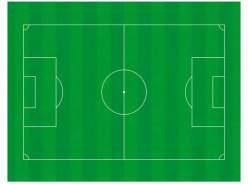
Breaking the playing area down
into key areas can help in the Risk
Management process.
Immediate playing surface.
Run off area.
Associated equipment.
Surrounding area.
F
children’s play areas
roadways,
walkways,
bike paths
fenceline