Basic HTML Version


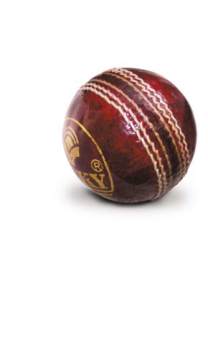

touchline
Insight
Shane Watson
– injury prone?
As the much anticipated Ashes series of cricket gets underway,
Australia’s selection panel will be keen to see Shane Watson
cement this place at the top of the batting order. The talented
28 year old has long been regarded as one of Australia’s most
promising players, but a string of injuries have lead to his career
being erratic.
When fit, he is a powerful batsman and a menacing right arm
medium pacer. A clean hitter of the ball, he was elevated to
opener in one day matches, and now finds himself paired with
Simon Katich at the top of the test team for the Ashes.
The stress that pace bowling places on a cricketer’s back is
well documented, and Watson has suffered from back injuries
throughout his career. One study done in South Africa found that
bowling is responsible for slightly less than half of all injuries in the
game (41%). Many Australian fast bowlers have long stretches
out of the game with injuries, such as Damien Fleming, Merv
Hughes and Brett Lee. Bruce Reid, a lanky West Australian who
played for the national side in the eighties, lost a battle against
injury and was forced to retire.
As sports science becomes ever more sophisticated, cricketers
are less likely to spend time injured or to be forced into early
retirement. Injury prevention in the formative years has been
shown to minimize later risks. Dr Deepak Hiwale has said that
previous injury is an important predictor of subsequent injuries in
a fast bowler and coaches are well advised to keep young bowlers
injury free for as long as possible.
These days, the action of the
bowler is carefully monitored to
ensure that he is placing as little
stress on his body as possible.
This leads to shorter run ups or
smoother actions at the crease
with can help to protect the joints
and backs of the players.
Lee, who is currently playing himself
back into contention for the Ashes
series in domestic cricket, has been out for
over two years. His action is considered by experts to be very
pure, but despite this, he still succumbed to injury.
Watson has been receiving treatment and advice to prevent his
injuries and has devised a smoother action. In the Ashes series he
will not be a front line bowler, but rather employed as a partnership
breaker or a change bowler. Ricky Ponting, the Australian captain,
knows Watson’s qualities and will use him sparingly.
Watson remains one of Australia’s best hopes for a genuine all-
rounder, a position that was previously filled by Andrew Symonds
and before him, Steve Waugh. It will require care and craft to keep
him well and on the field.
The Delhi Commonwealth
Games Medal Tally
Place Country
Gold
Silver
Bronze
Total
1
Australia
74
55
48
177
2
India
38
27
36
101
3
England
37
59
46
142
4
Canada
26
17
32
75
5
South Africa
12
11
10
33
6
Kenya
12
11
9
32
7
Malaysia
12
10
13
35
8
Singapore
11
11
9
31
9
Nigeria
11
10
14
35
10
Scotland
9
10
7
26
11
New Zealand
6
22
8
36
12
Cyprus
4
3
5
12
13
Northern Ireland 3
3
4
10
14
Samoa
3
0
1
4
15
Wales
2
7
10
19
16
Jamaica
2
4
1
7
17
Pakistan
2
1
2
5
18
Uganda
2
0
0
2
19
Bahamas
1
1
3
5
20
Sri Lanka
1
1
1
3
The Commonwealth games saw Australia as the clear winner,
racking up 74 gold, 55 silver and 48 bronze. Host nation, India,
came second with a total of 101 medals, with England and Canada
coming 3rd and 4th respectively.