Basic HTML Version











F
touchline
8
In each edition of Touchline we will provide an in-depth look at
new, upcoming and unusual sports. In this first article in the
series we focus on the relatively young sport of Wakeboarding.
touchline
The journal of spor t & r isk with an international perspective
Issue 7
plus +
| insight | on track | sports shorts | world news round up
Risk Management
Focus -
Part II
Photo courtesy of Liz Filmer
XIX Commonwealth
Games in focus
Prozone -
Ruining Sport?
World cup 2018 and
2022 - race to be hosts
Spotlight on Sport
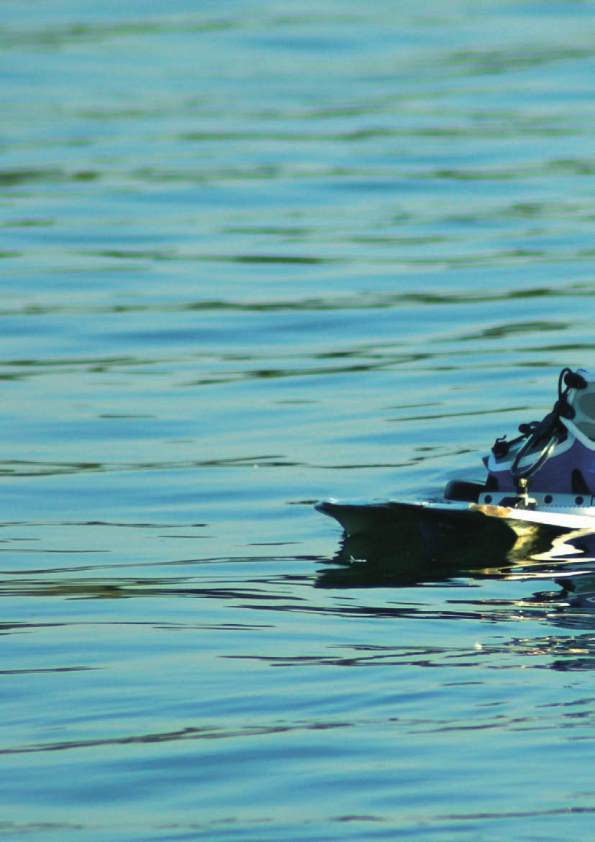
Wakeboarding is a sport that has
grown in popularity since its early
days in the 1980s. A natural progres-
sion from waterskiing, its evolution
has seen it become one of the most
exciting of all water sports.
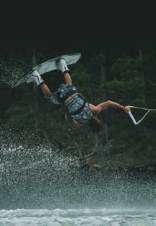
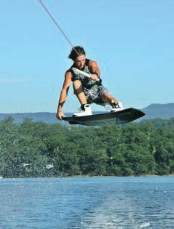
Dragged behind a speedboat,
wakeboarders skim across the wake
to engage in a range of elaborate spins
and tricks. While it is comparatively
easy for beginners to become
competent in the basics of the sport,
mastery requires years of practice.
A lighter board enables enthusiasts
less stability but more scope for their
tricks. The wakeboard itself is more
manoeuvrable than waterskis and
experts can achieve a great deal of
height when hitting the wake.
The sport has a steadily growing
base of enthusiasts and many begin
at an early age. In an interview with
wakeboarding.com
, break-out star
Harley Clifford said, “Probably around
13 or 14 it hit me that I could make
this my life. When I was growing up, it
was kind of the sport that I did. We just
went wakeboarding every afternoon
pretty much as a family because we
lived on the water. I just loved it a lot,
and I wanted to do it all the time.”
Wakeboarding, like any high-speed
water
sport,
can be dangerous. Poor equipment
or negligence can lead to serious
injuries. Martin Hume from Elanora on
the Gold Coast sustained a serious
spinal injury when he was 17 in a
wakeboarding accident. The accident
has left him with quadriplegia.
“I spent 11 months in rehabilitation
and then came home in October 2008.
Since then I’ve gone back to university
and things are different now, it’s not as
easy as it used to be, getting out of
bed - it takes a lot longer and getting
ready for things - there’s a lot more
planning involved, you just can’t jump
in the car and go somewhere.”
His message to wakeboarders and all
other water sports fans is to weight
the dangers and to be aware. “It’s a
matter of taking measured risks and
not allowing yourself to get into stupid
situations. So if you’ve been drinking,
don’t risk activities such as swimming
or surfing, and always walk into the
water, never jump into the water.”
Quality equipment is vital to maintain-
ing safety in wakeboarding. The
board itself is of primary
importance, as its balance
and weight can ensure that
the rider is able to cope
with conditions. The rider’s
height and weight should
be taken into consideration
when choosing a board.
However, experienced riders under-
stand that the other accessories
go a long way to ensuring a safe
exper i ence . Bi nd i ngs mus t be
comfortable but secure the rider’s
feet tightly to the board. Cables and
handles that run from the boat to the
rider should be tested for wear that
can result in snapping.
A wakeboarder’s kit should be of the
highest possible quality and boarders
of all abilities should invest in a helmet
and a life jacket which is sanctioned
by official compliance bodies such
as the US Coast Guard. There are
cheaper, less-bulky options but most
experts agree that these minimize the
effectiveness of these devices.
Wakeboarding offers its devotees a
thrilling experience, coupling speed
with flair. While no sport is free of
risk, with the right equipment and
approach, wakeboarding can avoid
the inevitable danger that comes with
the territory.
Touchline caught up with Wade Carroll, who
featured in that amazing photograph on the
front page of the last edition, to find out more
about his love of wakeboarding.
Wade, who lives in Kiama, NSW, Australia is 16 years
old and lives for the sport of wakeboarding. He started
wakeboarding in the Christmas school holidays at the end
of 2006 when he was about 12 years old. So he has been
hitting the water for over 4 years now. So, what attracted
him to the sport in the first place?
“My Dad and my next door neighbours at Lake Conjola were
always trying to convince me to have a go at wakeboarding
with them. Then one day, Dad had gone home, none of my
mates were around and I was just sitting around at our van park, extremely
bored, when my neighbours talked me into going out on their boat with them.
I went along and had a go at wakeboarding for the first time and was
W k o r ng