Basic HTML Version


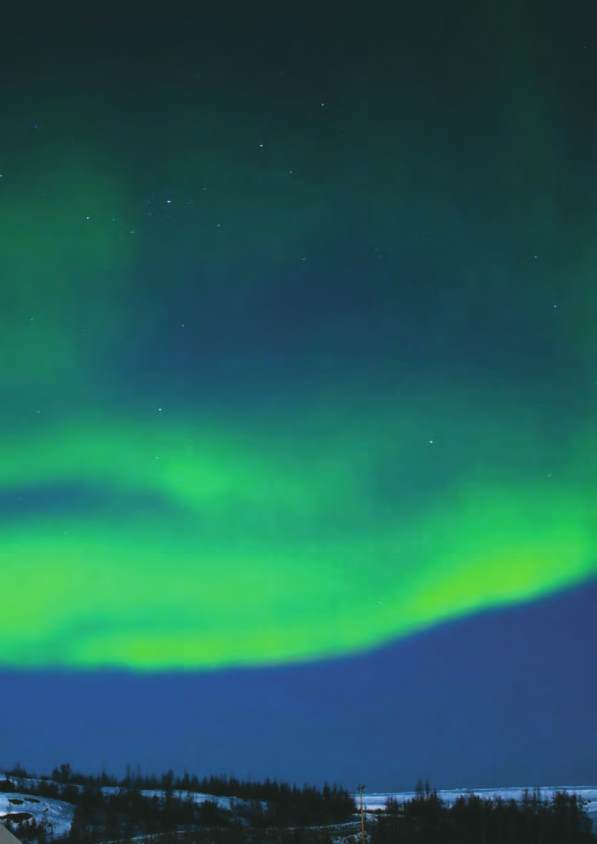
Photo by: Dave Dyet
touchline
13
of a power shutdown as a result of space weather, and technology
has certainly progressed since, exemplified by automatic grid shut
down technology implemented to protect against surges.
An interesting note is that renewable energy sources tend to be
more vulnerable to damage. Renewable energy plants, such as
solar energy, are often located in remote areas to maximise their
effectiveness. This necessitates longer, more susceptible, power
lines. Are increased risk and protective costs going to remain
viable as the trade off for environmentally friendly energy?
Communications developments in general over the past 30 years
have drastically reduced the threat from space weather with the
move towards fibre optics. Whilst landlines and the internet will
remain unaffected, the one area that remains weak is wireless and
mobile phone signals which can be upset by solar radio bursts.
For all the commuters out there, rail transport has actually become
more at risk with the development of technology. Space weather
would have little impact upon the steam trains of yesteryear,
but our modern trains are open to not only power disruption but
also signalling failure. Train signalling is communicated via the
metal rails which suffer from the same problem as power grids
– increased current can be forced into the rails by a geomagnetic
storm, causing signal failure. There is awareness of this risk in
countries more frequently affected by the phenomenon (countries
closer to the Arctic) such as Sweden, so this problem looks
avoidable with some collaboration.
If physical changes are not feasible, then contingency plans
should be devised.
A prime example in the power industry occurred in 2000 when
space weather warnings allowed PJM (a major power distributor
in eastern USA) to restrict long distance flow and prevent damage
to the grid. This did however result in a spike of $50 per megawatt-
hour during the peak of the storm.
In the aviation industry, flights can be forced to change or even
abandon flight paths over the Arctic in periods of increased space
weather to combat radiation and communications disruption.
Airlines rarely purchase business interruption cover (as shown
by the Icelandic ash cloud disruptions last year), so one response
is the development of the Canadian Polar Communications and
Weather satellite. This will be stationed over the polar region
to provide an alternative communication relay and allow flights
to continue; however this is also vulnerable in times of intense
space weather and cannot be relied upon as the sole source of
airplane communications.
The availability of improved information and understanding of
space weather will help previously uneducated industries to
better prepare (although this is dependant on specialist data
analysis), and physical in built protection are good starting points
for defence. We finally need to consider the implications for the
insurance industry as the last line of protection.
Whilst there is a more established market for satellites, there
is limited availability of insurance products covering the low
frequency, high severity impacts of space weather on terrestrial
risks at present. Many of the perils arising from space weather
may fall outside of coverage, be specifically excluded or remain
an uninsured peril.
This is an area that may change in the coming years as the
perils of space weather are highlighted, especially in the area of
Business Interruption. There are a litany of knock on impacts –
consider consequential loss after a power blackout, disruption to
the financial sector when satellite run time stamping is disrupted
or lost revenue after a suppliers’ delivery or computer system
failure. Would a geomagnetic storm be considered the proximate
cause where power cables or pipelines are damaged? The BI
delays may be lengthy when power transformers are damaged as
they are produced by only a limited number of manufacturers and
the majority are purchased by newly industrialised countries such
as China and India.
Additionally, it is not just the large events that cause damage.
Aggregation is an issue with transformers where more moderately
sized space weather events can cause their gradual degradation
and incur maintenance and replacement costs.
?sksir elbarusninu yllatnemadnuf deredisnoc eb eseht dluohS
Who should bear the ultimate responsibility? There are many
more questions raised by the space weather issue that need
careful consideration concerning business sectors that perhaps
weren’t obvious victims at first glance. Certainly, the issue needs
to be addressed before the Olympic opening ceremony…
Understandably there is a
concerted industry effort to
implement changes to alleviate
the impacts of space weather...