Basic HTML Version


F
© Gebauermarkus | Dreamstime.com
touchline
14
Are you flirting with disaster or managing it?
The word disaster can be used flippantly in connection with sport to describe the loss of a key player
through injury or a particularly one-sided scoreline. However, recently in Australia and New Zealand
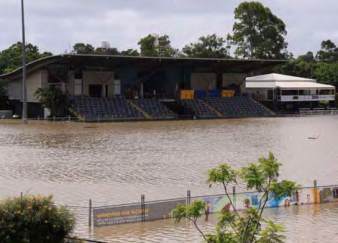
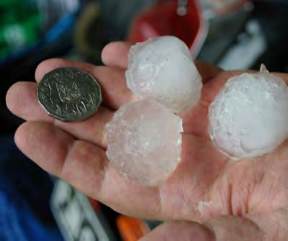
sporting bodies have been dealing with real life disasters in the form of earthquakes, floods and a
cyclone in north Queensland. Although it is impossible to completely avoid the effects of an earthquake,
tropical cyclones or rising floodwaters, there are some steps that sporting bodies can take to mitigate
their potential loss arising from such disasters and manage risks in the aftermath of such disasters.
FOCUS on Risk Management
Part IV
Identifying your risks
Ideally, the first steps to disaster recovery can be taken before
the local dam levels become critical or other signs of impending
disaster appear. That first step is thinking about and planning for
the natural disasters which a sporting body might confront.
Once you have started to think about what might previously have
been unthinkable, the process of recovery planning is analogous
to other forms of risk management, such as monitoring the
condition of a club’s playing fields.
Like any other risk management exercise, the first question a
sporting body needs to consider is what type of natural disasters
could occur. Location is a key factor. Rowing or sailing clubs
are clearly vulnerable to possible flood damage. Town planning
factors often see ovals and clubhouses located on flood plains
unsuitable for housing. Surf clubs take the full brunt of cyclonic
winds and waves while bushland carries higher fire risks.
Can insurance cover the risk?
After identifying the natural hazards to which it might be exposed,
a sporting body should review its insurance arrangements to
assess whether its insurance policies will respond to those
risks. The availability of insurance will depend upon individual
circumstances of the potential insured and its location and the
cost of obtaining cover for flood needs to be considered against
the potential risk. The policy wording, particularly the definitions
of the risks being insured against, should be reviewed to ensure
that they meet with the club’s needs. For example, do you have
flood cover or is it just storm run-off cover? What about storm
surge or tidal wave? Is it new for old or just indemnity cover?
Is the insured value adequate? If there is any uncertainty, an
insurance broker is an invaluable ally. Document your queries
and responses so following committees know where they stand.
Responding to the risk
Although insurance is a critical part of a sporting club’s disaster
recovery strategy, it is invariably better to avoid the loss in the first
place. Clubs should also take steps to minimise the damage they
might suffer in the event of a natural disaster rather than simply
relying upon insurance.
It is difficult to respond well to a disaster in the heat of the
moment. Forethought and planning is the key. Procedures for
foreseeable disasters need to be thought through, documented
and then displayed in a prominent place in the club. Evacuation
or alternative storage locations should be designated. Step
by step procedures and precautions need to be spelt out. For
example, rowing clubs need to be on the water, so floodproofing
is practically impossible. A more appropriate response is to have
a plan in place for equipment to be removed and be located to
drier ground in the event of a flood. The club should also identify
an office holder to be responsible for reviewing and updating the
plan and, if necessary implementing that plan. The rowing club
in this example would be fortunate as it is likely to have ready
access to boat trailers and plenty of available muscle to assist in
moving equipment so long as someone has the presence
James McIntyre, Senior Associate, Litigation & Dispute Resolution, DLA Phillips Fox, Brisbane, Australia.